

The 5 keys to a successful SOAR implementation: What makes a project successful?
SOAR platforms have been key players in the operations of modern SOCs for years. The promise of the technology seems simple: to unify incident response, automate repetitive tasks, and increase the efficiency of analysts.
The reality, however, is far more complex. A successful SOAR project is not primarily a technological challenge, but rather a matter of process, organizational, and change management.
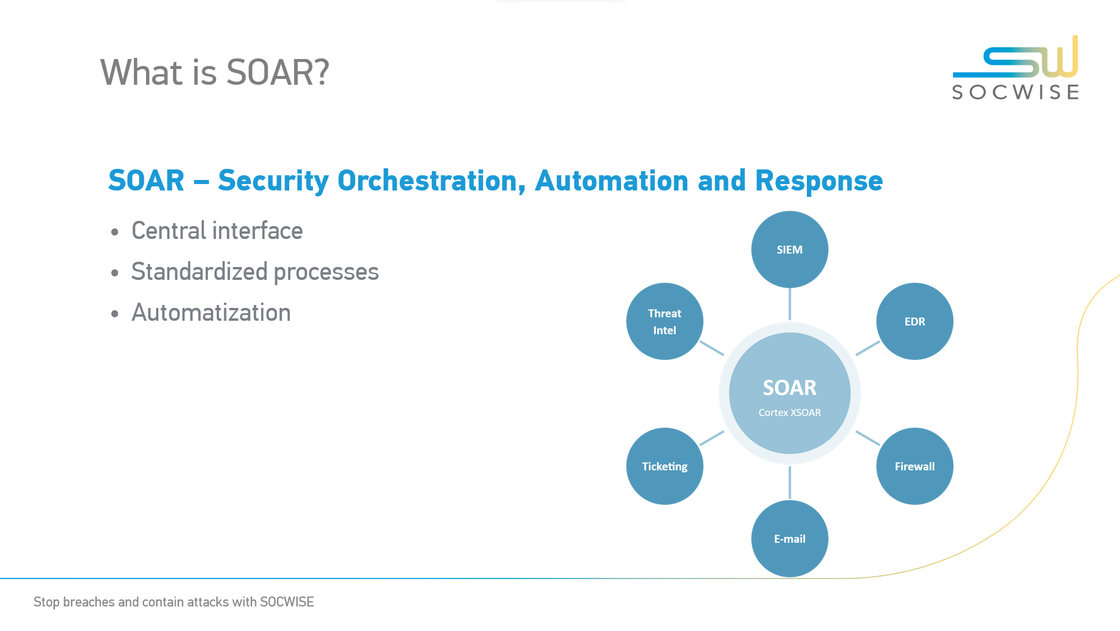
What is the true purpose of SOAR?
For most SOCs, the primary problem is not a lack of automation, but fragmented operations.
Analysts often switch between several different security tools, while information related to an incident is scattered across multiple systems. One of the most important goals of SOAR is therefore to:
- provide a unified workspace,
- reduce manual searching,
- standardize incident management processes,
- support the subsequent implementation of automation.
A well-structured SOAR solution does not begin with automation. First, it makes operations transparent and measurable and then builds automated processes on top of that.
Myth #1: SOAR replace analysts
In the early days of SOAR solutions, many expected that the number of analysts could be significantly reduced.
However, real-world experience shows that the technology does not replace analysts; rather, it lightens their workload.
The greatest business benefits typically appear in the following areas:
- faster incident handling,
- less manual administration,
- more consistent decision-making,
- less reliance on the expertise of specific key personnel,
- better auditability and reportability.
The goal is not to eliminate L1 analysts, but to enable professionals to perform genuine analytical work instead of low-value-added tasks.
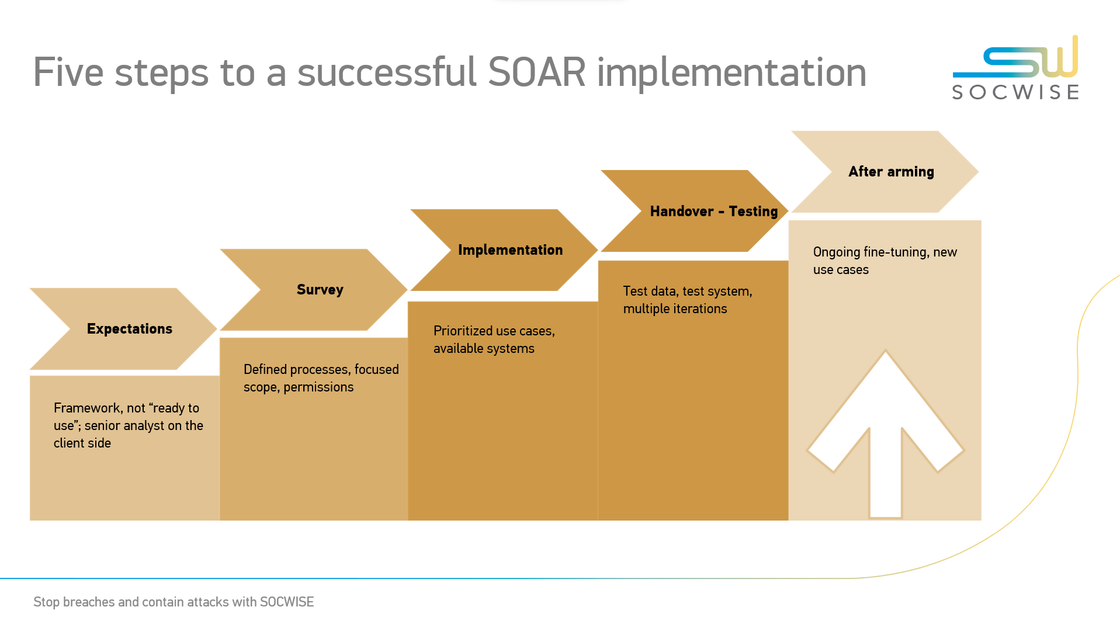
Step Zero of a successful project: defining processes
The most common mistake is assuming that a modern SOAR platform alone will solve an organization’s problems.
In reality, a playbook can only automate what already exists as a well-defined process.
That’s why the first question in every successful project is:
How does incident management work today?
If there is no clear answer to this, then the processes must be established first, and only then is it worth discussing automation.
Experience shows that the assessment and planning phase alone can account for as much as 20–30% of the entire project.
Which use case should be the first?
There is no one-size-fits-all answer, but three approaches are particularly common:
1. High-volume incidents
Processes that generate large volumes of data on a daily or weekly basis.
Examples:
- failed logins,
- malware alerts,
- endpoint security events.
2. Rare but critical processes
These occur only a few times a year but carry a high risk.
In these cases, the goal is often not automation, but rather preserving knowledge and ensuring consistent execution.
3. Tasks requiring a lot of manual work
Examples include:
- collecting data from multiple systems,
- sending email notifications,
- preparing reports,
- status updates.
Even partial automation of these tasks can result in significant time savings.
Why do projects still hit snags?
Technology is rarely the biggest obstacle.
The real challenges are typically the following:
- a lack of ownership on the client side,
- poorly defined processes,
- authorization issues,
- network and integration limitations,
- organizational resistance to change.
A particularly common problem is that, even though a process could technically be automated, the organization does not grant authorization to, for example, modify firewall rules or automatically isolate systems.
The most important factor for success: organizational support
A common characteristic of the most successful SOAR projects is that the initiative enjoys support from senior management.
This is because automation often changes existing operating models, reshapes areas of responsibility, and eliminates manual tasks that were previously considered indispensable.
Success therefore requires not only technological commitment but also organizational commitment.
Lessons learned from a real-world project
During a SOAR implementation at a large enterprise, the client decided to develop an extremely complex automated process consisting of nearly 450 steps. Development and fine-tuning took nearly a year, which placed significant pressure on both the client and the project team throughout the project.
However, the results justified the effort invested.
The processing time for incidents, which previously took an average of two days, was reduced to a few tens of minutes. Processes became standardized, the workload on analysts was reduced, and response times improved dramatically. Ultimately, the project not only became one of the most successful developments in the field of information security but also received recognition at the corporate group level.
This example clearly illustrates that the success of a SOAR implementation is not necessarily determined by quick results, but rather by well-chosen goals, consistent planning, and organizational support.
What's the next step?
With the emergence of AI-based SOC platforms and autonomous AI agents, the question is increasingly being raised: Is it still worth implementing a traditional SOAR solution today, or is it more practical to build on these new technological possibilities? Existing SOAR systems can continue to play a valuable role, but before implementing a new solution, it’s worth considering AI-based alternatives as well.
Beyond the technology: What makes a SOAR implementation successful?
SOAR is not a magic box, nor is it a technology that can single-handedly solve the operational challenges of a SOC. It creates real value when it is built on clearly defined processes, adequate organizational support, and continuous collaboration.
The key to a successful implementation is consistent operations, a well-chosen initial use case, continuous iteration, and customer commitment. When these factors come together, SOAR not only results in faster incident response but also delivers measurable business value to the organization.

